Table of Contents
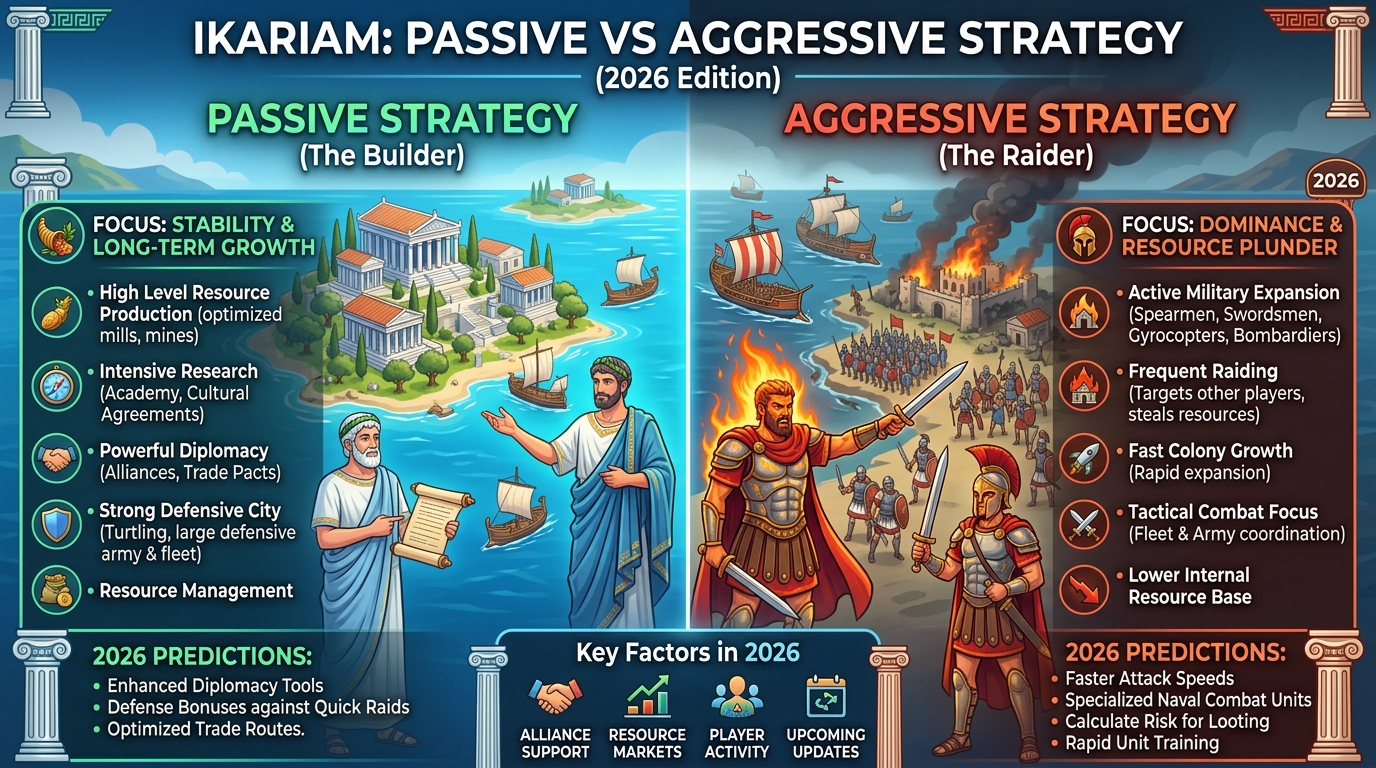
The divide between a passive and aggressive strategy in Ikariam is about which form of power you prioritise: defensive resilience or offensive force. A passive strategy focuses on building an unpillagable empire, while an aggressive strategy aims to expand by taking resources from others.
The Passive Strategy
The passive strategy is about creating a fortress that is simply not profitable or fun to attack. This approach includes a strong diplomatic component where you build good relations with neighbours to avoid conflict. The core principle is to make yourself a hard target so attackers look elsewhere for easier prey.
Core Defence: Warehouses
Your primary defence is your Warehouses. High-level Warehouses protect a large amount of your resources. The goal is to be so active that you can spend, move, or sell resources before they exceed this protected safe level, meaning an attacker gets nothing. A player who successfully does this is often called unpillageable.
Minimal Military
Instead of a large, expensive army spread across all cities, rely on a few cost-effective defensive measures. This includes a high-level city wall which can significantly damage attacking troops, and using an army composed of cheap, bulk units like Spearmen which cost very little to maintain while inflating your troop count to deter attackers.
Military Camouflage
A clever tactic is to store almost all your military in one single, powerful city with a high-level Hideout to prevent spying. For your other cities, just leave one ship to force an attacker to blockade before they can pillage.
Goal
The passive player’s goal is steady, sustainable growth without the high costs and risks of constant warfare. This allows for a stronger long-term economy with more resources to invest in buildings, research, and acquiring all 160 cargo ships.
The Aggressive Strategy
The aggressive strategy is for players who view conflict as a primary tool for growth. It turns the game into a war game where military strength is the key to acquiring everything you need.
Core Offence: Piracy and Pillaging
This is the main source of income. Aggressive players use their armies and navies to raid the cities of inactive players or other players for resources. For a raiding army, siege units like Mortars are essential for breaking through high-level city walls.
High Military Investment
This strategy requires building, maintaining, and constantly upgrading a large, powerful, and diverse military. This includes specialised units like Steam Giants to intimidate smaller players and Hoplites as powerful, cost-effective frontline troops.
Logistics and Proxies
To attack effectively, especially over long distances, aggressive players use tactics to minimise travel time. This can involve founding a mobile colony near a target, occupying a town on a target’s island, or using an ally’s garrison rights.
Goal
The aggressive player’s goal is to dominate their local area and server through military might. Wars can become long, bitter, and time-consuming, requiring near-constant activity. A player might invest years in a personal vendetta, only relenting when they have achieved total victory.
Comparison Table
| Feature | Passive Strategy | Aggressive Strategy |
|---|---|---|
| Core Belief | Make yourself unprofitable to attack | Take what you need from others |
| Key Defence | High-level Warehouses and City Walls | A powerful, active army and navy |
| Military Focus | Minimal, defensive, cheap units like Spearmen | Large, diverse, expensive units including siege weapons |
| Growth Method | Steady internal development | Rapid expansion through looting and conquest |
| Risk Level | Low risk, low intensity | High risk, high intensity |
| Time Commitment | Less active management required | Frequent, attentive play required |
Which Strategy to Choose
Your choice depends on your playstyle and how much time you are willing to invest.
Passive is better for players who cannot be online constantly, prefer steady growth, and want to avoid the stress of constant warfare. It is also more forgiving of mistakes.
Aggressive is better for players who enjoy competition, can dedicate significant time to the game, and are comfortable with high-risk, high-reward gameplay. It requires constant attention to troop movements and battle timings.
Balanced Approach
A balanced approach can also be successful. You can maintain a strong economy as a foundation, and occasionally use a well-prepared, powerful army to raid a vulnerable target or launch a retaliatory strike. Many experienced players start aggressive early to build resources, then transition to a more passive, defensive posture as their empire grows.
The key is to understand that both strategies are valid. The best choice is the one that fits your available time and personal enjoyment of the game.